
What Is Body Contouring?
Body contouring—also known clinically as body sculpting—refers to a group of surgical procedures designed to reshape, firm, and proportion the human physique. Rather than serving as a primary weight-loss method, body contouring targets localised fat deposits and excess sagging skin that do not respond to conventional diet and exercise. The procedure is typically achieved through two primary approaches: surgical fat removal (such as liposuction and autologous fat grafting) or excisional skin and muscle tightening (such as abdominoplasty and body lifts).
Body Contouring in Seoul
South Korea is recognised globally for its structured aesthetic and reconstructive healthcare system. Seoul operates under strict medical regulations monitored by the Ministry of Health and Welfare (MOHW). Medical centres treating international patients must hold specific government accreditations. These registrations ensure facilities comply with established standards for patient safety, transparent pricing, and infection control protocols. Consequently, visiting patients benefit from a regulated clinical environment that prioritises surgical precision and structured post-operative rehabilitation.
What Are the Types of Body Contouring in Seoul?
Plastic surgeons in Seoul perform several surgical techniques tailored to specific anatomical needs:
- High-Volume & Targeted Liposuction: Uses vacuum suction, ultrasound-assisted (VASER), or water-assisted (Body-Jet) technologies to remove stubborn subcutaneous fat from the abdomen, flanks, thighs, arms, or back.
- Abdominoplasty (Tummy Tuck): Excises loose abdominal skin and tightens separated abdominal wall muscles (diastasis recti) to restore a flat, firm midsection.
- Autologous Fat Transfer (Gluteal & Hip Grafting): Harvests fat via liposuction, purifies the cells, and re-injects them into the hips or buttocks (Brazilian Butt Lift) to balance lower-body proportions.
- Post-Bariatric Body Lift: Removes large aprons of excess skin (panniculectomy) across the torso, upper arms (brachioplasty), or inner thighs following massive weight loss.
- Male Chest Contouring (Gynaecomastia Surgery): Combines glandular tissue excision with targeted liposuction to create a flatter, masculine chest contour.
- Revision Liposuction: Corrects surface irregularities, contour depressions, or fibrosis resulting from previous liposuction procedures.
Who Is A Suitable Candidate For Body Contouring?
A clinical consultation with a specialist is recommended if you:
- Experience stubborn fat pockets that persist despite maintaining a stable weight and active lifestyle.
- Notice loose, stretched skin or abdominal muscle separation following pregnancy and childbirth.
- Have excess sagging skin that causes physical discomfort or chafing after significant weight reduction or bariatric surgery.
- Wish to improve overall bodily symmetry and waist-to-hip proportions through autologous fat grafting.
- Require corrective surgery to smooth uneven contours from a prior aesthetic procedure.
What Are The Costs Of Pre-Operative Consultation & Diagnostics?
Thorough clinical screening and preoperative mapping are essential for safe surgical outcomes. Below are the estimated costs for consultations and diagnostic tests in Seoul:
| Screening / Diagnostic Test | Function & Clinical Description | Estimated Cost (KRW)* | Estimated Cost (USD)* |
| Specialist Consultation | Physical assessment of skin elasticity, fat distribution, and muscle tone by a plastic surgeon. | ₩30,000 – ₩100,000 (Often waived if surgery is booked) | $25 – $75 |
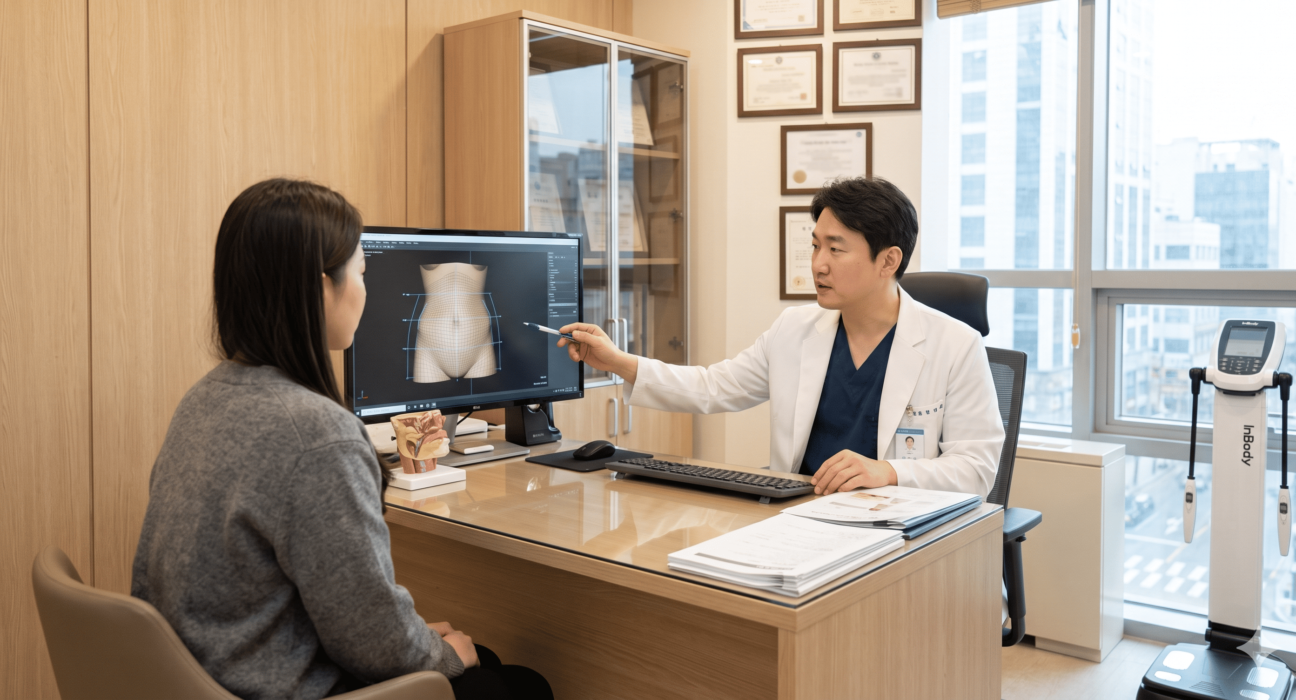
| InBody & 3D Body Composition Scan | Measures visceral versus subcutaneous fat ratios and maps body contours for surgical planning. | ₩30,000 – ₩100,000 | $25 – $75 |
| Pre-Operative Health Screening | Mandatory blood tests, coagulation profile, ECG, and chest X-ray to verify fitness for anaesthesia. | ₩100,000 – ₩250,000 | $75 – $190 |
| Subcutaneous & Abdominal Ultrasound | Evaluates fat layer thickness and screens for underlying abdominal wall hernias or muscle separation. | ₩100,000 – ₩250,000 | $75 – $190 |
*Disclaimer: The estimates above are based on publicly available sources from private medical centres in Seoul in 2026. Prices vary depending on the facility and the inclusion of translation services. Please check directly with your chosen healthcare provider for up-to-date pricing.
Which Doctor For Body Contouring?
Surgical body sculpting requires a coordinated medical team to ensure patient safety and anatomical precision:
- Board-Certified Plastic Surgeon: Your primary surgeon should hold certification from the Korean Society of Plastic and Reconstructive Surgeons (KSPRS). They possess specialised training in fluid management during high-volume fat extraction, deep-tissue suturing, and safe fat grafting planes.
- Board-Certified Anaesthesiologist: Major body contouring procedures require general anaesthesia or monitored intravenous sedation. Accredited medical centres employ dedicated, in-house anaesthesiologists who monitor patient vital signs continuously from induction through recovery.
Preferred Doctors
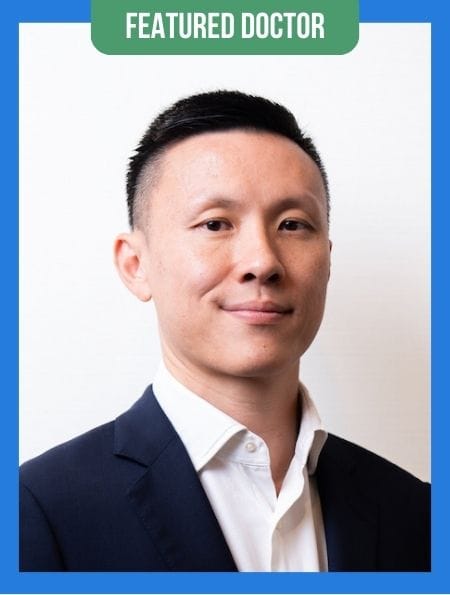
[SG] Featured Doctor
Featured Story
Which Hospitals And Medical Centres Provide Body Contouring Surgery?
For body contouring and reconstructive sculpting in Seoul, patients can access care across major tertiary university hospitals and specialised surgical centres. In the tertiary sector, established institutions—such as Seoul National University Hospital (SNUH), Asan Medical Center, Samsung Medical Center, and Korea University Anam Hospital—operate comprehensive plastic and reconstructive surgery departments. These university hospitals frequently manage complex post-bariatric skin excisions, abdominal wall reconstructions with hernia repair, and functional procedures requiring multidisciplinary hospital infrastructure.
For elective aesthetic procedures, patients often visit accredited plastic surgery hospitals and specialised liposuction centres in the Gangnam and Seocho districts. Established institutions—such as 365mc Hospital, JK Plastic Surgery Center, VIEW Plastic Surgery, Banobagi Plastic Surgery, Wonjin Plastic Surgery, and ID Hospital—operate dedicated multi-storey surgical facilities. These centres feature in-house anaesthesiology teams, laminar-flow sterile operating theatres, and emergency power backup systems. Additionally, dedicated international patient departments provide multilingual translation, custom compression garment fitting, and structured post-operative deswelling care (such as high-frequency RF and LED therapy).
What Is The Cost Of Body Contouring Surgery In Seoul?
Surgical fees in Seoul depend on the number of anatomical zones treated, total fat volume extracted, and overall surgical complexity.
| Treatment / Procedure | Clinical Description | Estimated Cost (KRW)* | Estimated Cost (USD)* |
| Targeted Liposuction (Per Area) | Focused fat removal for smaller zones such as the upper arms, love handles, or calves. | ₩2,000,000 – ₩4,500,000 | $1,500 – $3,400 |
| 360-Degree Circumferential Liposuction | Comprehensive fat extraction around the entire torso (abdomen, flanks, and lower back) or thighs. | ₩5,000,000 – ₩9,000,000 | $3,750 – $6,750 |
| Full Abdominoplasty (Tummy Tuck) | Excision of excess lower abdominal skin combined with internal rectus muscle tightening. | ₩8,000,000 – ₩15,000,000 | $6,000 – $11,200 |
| Gluteal Fat Grafting (BBL) | Liposuction harvesting paired with purified autologous fat transfer to contour the hips and buttocks. | ₩9,000,000 – ₩14,000,000 | $6,750 – $10,500 |
| Arm or Thigh Lift (Brachioplasty / Thighplasty) | Surgical excision of hanging skin along the upper arms or inner thighs after weight loss. | ₩6,000,000 – ₩11,000,000 | $4,500 – $8,250 |
| Revision Liposuction & Contouring | Corrective fat grafting and scar tissue release to smooth post-surgical irregularities. | ₩7,000,000 – ₩14,000,000 | $5,250 – $10,500 |
*Disclaimer: Prices listed are estimates only based on publicly available sources and do not constitute a fixed quote. Actual costs may vary depending on individual BMI, practitioner qualifications, custom compression garments, and post-operative care needs. A formal cost breakdown is provided following a direct clinical consultation.gical needs, practitioner qualifications, and post-operative treatments. A formal cost breakdown is provided following clinical assessment.
Recovery
Understanding the post-operative timeline helps international patients plan their stay in Seoul and schedule time away from work:
Standard Recovery Timeline:
| Recovery Phase | Timeline | Patient Action & Clinical Milestones |
| Immediate Recovery | Days 1 – 3 | Rest indoors and take short walks to promote circulation. Expect swelling, bruising, and fluid drainage. Wear a medical compression garment continuously. |
| Clinical Follow-Up | Days 7 – 14 | Return to the clinic for wound dressing changes, surgical drain removal (if applicable), stitch removal, and deswelling treatments. |
| Return to Normalcy | Weeks 2 – 4 | Patients typically resume desk jobs and light daily routines. Bruising subsides noticeably. Continue wearing compression garments as instructed. |
| Physical Activity | Weeks 6 – 8 | Cleared to gradually resume cardiovascular exercise and light strength training. Avoid intense core strain after abdominoplasty until cleared. |
| Final Results | Months 6 – 12 | Residual deep tissue swelling resolves completely. Skin contracts to the new contour, and surgical scars gradually mature and fade. |
Risks
All surgical body contouring procedures carry inherent clinical risks. Understanding potential complications supports informed medical decision-making:
- Seroma and Haematoma: Fluid or blood accumulation beneath the skin flap, which may require clinical aspiration or temporary surgical drains.
- Contour Irregularities: Surface unevenness, rippling, or asymmetry if fat is removed unevenly or if skin elasticity is poor.
- Temporary Sensation Changes: Numbness or altered skin sensitivity over the treated zones, which typically improves over several months.
- Delayed Wound Healing or Scarring: Tension along excision lines (such as in abdominoplasty) can occasionally lead to thickened scars or slow healing.
- Infection or Deep Vein Thrombosis (DVT): Mitigated through sterile operating protocols, prophylactic antibiotics, early mobilisation, and compression therapy.
Selecting a KSPRS board-certified surgeon and strictly following compression garment guidelines significantly reduces these surgical risks.ks.
What Are The Insurance And Financing Considerations For Body Contouring?
Elective cosmetic body contouring—including liposuction, abdominoplasty, and gluteal fat grafting—is not covered by standard private health insurance or the Korean National Health Insurance Service (NHIS). However, functional reconstructive procedures, such as a panniculectomy to resolve chronic skin infections after bariatric surgery or concurrent abdominal hernia repair, may qualify for partial insurance coverage. International patients should verify policy terms with their insurance provider prior to travelling.
Value-Added Tax (VAT) Refunds
The South Korean government provides a Value-Added Tax (VAT) refund programme for visiting medical tourists. Eligible international patients undergoing cosmetic body procedures at MOHW-registered medical centres can claim an approximate 7% to 8% tax refund. Claims are processed at international airport customs counters or designated tax-refund kiosks in Seoul.
FAQs
1. Why is Seoul a popular destination for body contouring?
Seoul has a high concentration of board-certified plastic surgeons as well as dedicated hospitals focusing exclusively on liposuction and body sculpting. Accredited centres maintain strict anaesthesia safety protocols, transparent tiered pricing, and structured post-operative deswelling programmes for international patients.
2. How long should international patients stay in Seoul after surgery?
Patients undergoing single-area liposuction generally stay in Seoul for 7 to 10 days. For extensive procedures such as 360-degree liposuction, abdominoplasty, or body lifts, surgeons advise remaining in Seoul for 10 to 14 days. This allows time for drain removal, suture removal, and medical clearance before flying.
3. What is the difference between liposuction and abdominoplasty?
Liposuction removes excess subcutaneous fat pockets through tiny incisions but does not tighten loose skin or separated muscles. Abdominoplasty (tummy tuck) surgically removes sagging abdominal skin and tightens the underlying abdominal wall muscles, often combined with liposuction for complete torso contouring.
4. How long must I wear a compression garment after body contouring?
Patients are typically instructed to wear a custom-fitted medical compression garment 24 hours a day (except when showering) for the first 4 weeks, followed by 12 hours a day for another 4 to 8 weeks. Consistent compression minimises swelling, prevents fluid build-up, and helps the skin adhere smoothly to the new contour.
5. How can patients manage post-operative follow-up after returning home?
Accredited hospitals in Seoul provide detailed surgical records and discharge instructions in English. Many centres schedule video follow-up consultations to monitor scar maturation and coordinate with your local physician if in-person checks are needed.
Contact Us
If you are planning a primary body contouring procedure, seeking a second opinion, or exploring post-weight loss skin removal, we can help arrange a consultation with experienced plastic surgeons in Seoul. Contact us via the button below.
Additional Resources
- Korean Society of Plastic and Reconstructive Surgeons (KSPRS).
- Medical Tourism Accreditation | Ministry of Health and Welfare (MOHW), Republic of Korea.
- Patient Safety Standards | International Society of Aesthetic Plastic Surgery (ISAPS).
- Joint Commission International (JCI)